Programming
React vs Angular: Architecture and Performance for Enterprise Web Apps
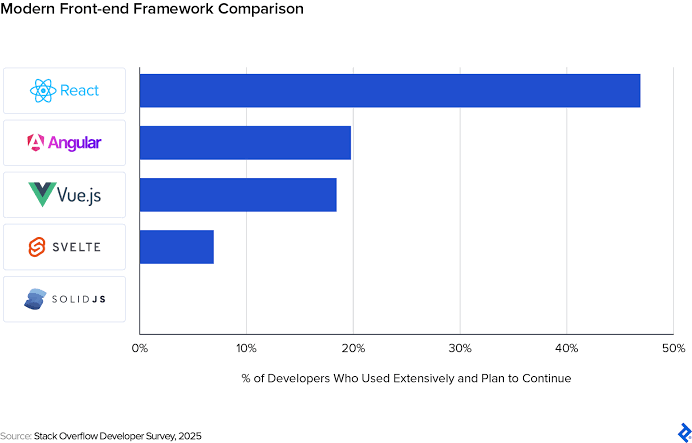
An article on Medium compares React.js and Angular in terms of architecture and performance. Judging by the title, the author leans toward React.js over Angular. This React vs Angular comparison targets enterprise web development, where applications need to grow large without becoming hard to maintain.
One caveat: only the opening teaser of the source was available. It is just a list of topics, so there are no benchmark numbers or detailed conclusions we can report here.
Four areas under the microscope
According to the teaser, the analysis touches on the following four areas:
- Virtual DOM reconciliation: how a framework decides which parts of the interface need updating when data changes.
- Bundle size: how much code the user's browser has to download.
- State management overhead: the cost of how an application manages and shares data between components.
- Developer velocity: how quickly a team can build and extend features in a large-scale application.
What it means for you
If you are weighing React against Angular for an enterprise project, these four areas can serve as a framework for discussion with your team. You can judge each option on browser performance, application size, the complexity of data handling, and how fast developers can work. For the full arguments and numbers, you will need to read the original article on Medium.
Category
Programming
Share